
Showing posts with label Fixed Gear. Show all posts
Showing posts with label Fixed Gear. Show all posts
Tuesday, March 16, 2010


Thursday, March 11, 2010
Sunday, October 11, 2009
Eindhoven!
Yesterday I had the great pleasure of participating in the Polopalooza bike polo tournament in Eindhoven alongside 11 other teams from around Europe. London won, of course. You can read more about their polo scene here.
For a full report on the Polopalooza tourney and the subsequent Rollapalooza event, see the Eindhoven Fixed Gear site.
But check out this video...Yours truly is seen scoring a goal in the opening scenes!
For a full report on the Polopalooza tourney and the subsequent Rollapalooza event, see the Eindhoven Fixed Gear site.
But check out this video...Yours truly is seen scoring a goal in the opening scenes!
Tuesday, October 6, 2009
London Part I
If you'd told me before I left Memphis that I would develop an acute passion for playing bicycle polo, I would have called you crazy; or at least confused.
But after having spent the better part of the last month playing a couple times a week in Amsterdam, the unforeseen has become reality: I absolutely love playing bike polo.
After using a mallet from the collective batch of mallets forged by the Amsterdam bike messengers at Infinity Express, I decided I needed to build something of my own. While the other mallets worked fine, (a bit beat up, sure, but that just gave them character!) I really wanted to have the experience of finding the materials for a mallet and piecing it together myself.
After asking around about materials, I found that Straight Edge Pat, a lovely polo player in the Amsterdam scene, had all the necessary parts for a mallet. Within a day, I had purchased the necessary parts: a ski pole, a piece of gas pipe, handlebar tape and a bolt.
 What I didn't have was a drill and the drill bits required to make the mallet, so I scurried over to Infinity Express for some help. Lester is pictured here helping me get the mallet head straight. Though we tried, the finished product was about as straight Forrest Gump's childhood legs. Still, it wasn't bad for a first go.
I met a fantastic young lady named Bianca at the bike polo tournament held in Amsterdam a couple weeks ago, and she encouraged me to come to a tournament being held in London during the bike film fest. Intrigued, I began making plans....
First, how to get the bike there. My friend South African James suggested a bike bag, which I could claim as luggage if I took the bus. So, I bought a EuroLines bus ticket to London, snagged the bike bag, and made ready for my trip across the English Channel.
 At the bus station, I disassembled my bicycle to fit it inside the bag. The wheels had to come off along with the pedals and handlebars, so I used a crescent wrenches and a hand tool to make the bike into a packable shape.
 On top of the wheels you can see the shaft of my freshly assembled bike polo mallet.
 Feeling quite proud of my work, I boarded the bus at 22:30 for an 8 hour overnight trip to Great Britain.
I slept well on the bus, which started out nearly empty in Amsterdam, but grew steadily more packed as we made stops in coastal Dutch towns and Belgium. By 1 a.m., the bus was packed, and I found myself next to a nice lady who smelled of fried onions. She must have had a sandwich or something in her luggage.
When I arrived at the Bow Road station in London via the Victoria Station it was 8 a.m. This was wicked early for my host, Emily, who had enjoyed the festivities surrounding the Bicycle Film Festival until just a few hours before he came to pick me up. A super sweet guy, Em, and one hell of a bicycle polo player.
 I found this poster just outside the Bow Road station. London has done a lot to improve the image of cycling over the last five years, concurrently alongside the improvement of their bicycle infrastructure, and I really like this message: catch up with the bicycle! It's a bit like saying, "get with the program yall! The bike is the only way to fly!"
On the day I arrived, I asked Em what was on the day's agenda. His reply was simple: "playing polo." Indeed. Polo was played, and competitively at that, for almost a full 8 hours.
 I brought my mallet and threw it into the grand shuffle, which is exactly as it sounds: a grand shuffling of all the polo mallets which results in the separation of teams. The mallets are separated into groups of three, and then each group faces off against another. The gentleman pictured above, presiding over a grand shuffle in later afternoon, had his hands full.
 The tournament started bright and early the next day with close to 30 teams registered. You can (sorta) see them listed here on the blackboard.

 Because polo is often a fierce game, Brixton Cycles--a full blown worker owned bicycle cooperative--sent out a mechanic to help repair any broken bikes. Nat, the Brixton mechanic, rode a Surly Big Dummy to the event with a complete tool set (and truing stand!) on the extended rear rack. It was quite impressive.
 My team, "Lopsided Titillating Loins," won in the first round. You can see our abbreviated name (Lopsided) advanced to play (polo) "Fiasco," a team of three youngsters that did REALLY well in the tournament. And because 2 of the 3 were barely at drinking age, the team was a crowd favorite throughout the night.
 Fiasco defeated us 5-3 in the second round, which put our team in the losers bracket where after winning one game we played team Zombie--veterans of London Bike Polo. We lost to Zombie, 5-2. I managed to maintain my dignity throughout the day largely because our record in the tournament was 2-2--not bad for a French guy, an American guy and an Australian guy who had never played as a team before!
 After many, many games of polo, an intermission was had in which the stepper bikes (pictured here) squared off with an all girls team on BMX bikes.
A good time was had by all.
Stay tuned for part II of the London post!
But after having spent the better part of the last month playing a couple times a week in Amsterdam, the unforeseen has become reality: I absolutely love playing bike polo.
After using a mallet from the collective batch of mallets forged by the Amsterdam bike messengers at Infinity Express, I decided I needed to build something of my own. While the other mallets worked fine, (a bit beat up, sure, but that just gave them character!) I really wanted to have the experience of finding the materials for a mallet and piecing it together myself.
After asking around about materials, I found that Straight Edge Pat, a lovely polo player in the Amsterdam scene, had all the necessary parts for a mallet. Within a day, I had purchased the necessary parts: a ski pole, a piece of gas pipe, handlebar tape and a bolt.
 What I didn't have was a drill and the drill bits required to make the mallet, so I scurried over to Infinity Express for some help. Lester is pictured here helping me get the mallet head straight. Though we tried, the finished product was about as straight Forrest Gump's childhood legs. Still, it wasn't bad for a first go.
I met a fantastic young lady named Bianca at the bike polo tournament held in Amsterdam a couple weeks ago, and she encouraged me to come to a tournament being held in London during the bike film fest. Intrigued, I began making plans....
First, how to get the bike there. My friend South African James suggested a bike bag, which I could claim as luggage if I took the bus. So, I bought a EuroLines bus ticket to London, snagged the bike bag, and made ready for my trip across the English Channel.
 At the bus station, I disassembled my bicycle to fit it inside the bag. The wheels had to come off along with the pedals and handlebars, so I used a crescent wrenches and a hand tool to make the bike into a packable shape.
 On top of the wheels you can see the shaft of my freshly assembled bike polo mallet.
 Feeling quite proud of my work, I boarded the bus at 22:30 for an 8 hour overnight trip to Great Britain.
I slept well on the bus, which started out nearly empty in Amsterdam, but grew steadily more packed as we made stops in coastal Dutch towns and Belgium. By 1 a.m., the bus was packed, and I found myself next to a nice lady who smelled of fried onions. She must have had a sandwich or something in her luggage.
When I arrived at the Bow Road station in London via the Victoria Station it was 8 a.m. This was wicked early for my host, Emily, who had enjoyed the festivities surrounding the Bicycle Film Festival until just a few hours before he came to pick me up. A super sweet guy, Em, and one hell of a bicycle polo player.
 I found this poster just outside the Bow Road station. London has done a lot to improve the image of cycling over the last five years, concurrently alongside the improvement of their bicycle infrastructure, and I really like this message: catch up with the bicycle! It's a bit like saying, "get with the program yall! The bike is the only way to fly!"
On the day I arrived, I asked Em what was on the day's agenda. His reply was simple: "playing polo." Indeed. Polo was played, and competitively at that, for almost a full 8 hours.
 I brought my mallet and threw it into the grand shuffle, which is exactly as it sounds: a grand shuffling of all the polo mallets which results in the separation of teams. The mallets are separated into groups of three, and then each group faces off against another. The gentleman pictured above, presiding over a grand shuffle in later afternoon, had his hands full.
 The tournament started bright and early the next day with close to 30 teams registered. You can (sorta) see them listed here on the blackboard.
 Because polo is often a fierce game, Brixton Cycles--a full blown worker owned bicycle cooperative--sent out a mechanic to help repair any broken bikes. Nat, the Brixton mechanic, rode a Surly Big Dummy to the event with a complete tool set (and truing stand!) on the extended rear rack. It was quite impressive.
 My team, "Lopsided Titillating Loins," won in the first round. You can see our abbreviated name (Lopsided) advanced to play (polo) "Fiasco," a team of three youngsters that did REALLY well in the tournament. And because 2 of the 3 were barely at drinking age, the team was a crowd favorite throughout the night.
 Fiasco defeated us 5-3 in the second round, which put our team in the losers bracket where after winning one game we played team Zombie--veterans of London Bike Polo. We lost to Zombie, 5-2. I managed to maintain my dignity throughout the day largely because our record in the tournament was 2-2--not bad for a French guy, an American guy and an Australian guy who had never played as a team before!
  After many, many games of polo, an intermission was had in which the stepper bikes (pictured here) squared off with an all girls team on BMX bikes.
A good time was had by all.
Stay tuned for part II of the London post!
Saturday, September 19, 2009
Bicycle Cultures?
The narrowing eyes; the furrowed brow; "Bicycle Cultures" they say, as if tasting the two words together for the first time.
For most people, though, it is during a conversation with me that they first use the two words "bicycle" and "culture" together as a concrete concept.
"I'm studying bicycle cultures," I tell them. "Interesting," they reply. "So are you writing a thesis or something? It's like an academic thing through university?"
No....not exactly. "I'm on a fellowship, not a scholarship; so there isn't any piece of scholarly work that results from the trip. Really, the trip is more about participating in bicycle cultures that 'studying' them," I say.
Approving nods and something to the effect of "well, that's perfect!" usually follows.
"So how do you study bicycle cultures?" asked a good friend yesterday.
I hope this post might shed a bit of light on both what I'm doing and how I'm doing it....
My work is probably best described as equal parts "best practice research," "solo bicycle adventuring," and "constant networking" with individuals within bicycle communities.
The best practices part is pretty straightforward: I make appointments with bicycle advocates, as I've done in Copenhagen and Amsterdam; I talk with folks in the municipality about the history and current state of affairs regarding bicycle policy; I take photos and observe infrastructure; I read official policy documents, accounts of the bicycle culture from local observers, and I talk to people in parks and on the road about their perceptions of "the bicycle."
I really try to zone in on what is important to bicyclists in the place I'm living to get a good sense of how well the bike culture has developed.
A good example of one of these "local issues" would be bicycle parking. In both Copenhagen and Amsterdam, the municipalities are trying hard to increase the number of bike parking spots while continuing to improve bike parking facilities so as to keep bikes secure and close to the rider's destination. They take this stuff seriously. I have a 150 page manual I received from the Danish Cycling Federation (DCF) about bicycle parking, and the content is just as you might guess. Page after page of information about what works and what sucks when it comes to bike parking. The book was so sought after by municipalities around the world they had to publish it in English a couple years ago.
Speaking of the DCF:
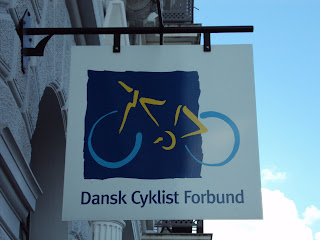 The Danish Cycling Federation has been an active force in shaping bicycle policy and road development in Denmark since 1905. They facilitated the protest movement during the oil crisis of the early 1970s which led to an increase in bicycle tracks and dedicated bicycle infrastructure in Copenhagen. The national and local bicycle routes across Denmark are signed, mapped and maintained with the help of the DCF.
In the Netherlands,
 you have the Fietsersbond, or the Dutch National Cycling Union with more than 130 branches and 33,000 members nationwide. Nationwide, by the way, means an expanse of land about twice the size of New Jersey containing approximately 16 million people. The Amsterdam branch has two paid employees and a crew of volunteers from a variety of neighborhoods across the city. These neighborhood volunteers report to the Fietsersbond any problems they see with current bicycle facilities, and the Fietsersbond lobbies the municipality to promote improvements.
The union has maintained excellent relations with the municipality since 1975, the year the Union was created, and the city continues to turn to the Fietsersbond as it expands and maintains the most bicycle friendly city in the Western world.
Solo bicycle adventuring is a wonderful way to see a country inside and out, to explore it's culture in a thoroughgoing manner. It is also a particularly nice way to gauge the bicycle friendly status of a nation. Much has been said so far about solo touring in previous posts, so take a scroll back through or see it all for the first time!
Networking within the bicycle community is perhaps the most important and the most gratifying part of my work. It is also, at times, the most difficult.
 This group of guys is hard at work installing the floors at the soon to be "Pristine Fixed Gear" bike boutique. We hung out on this Friday morning and did some construction work, though we usually do more fun stuff like play bike polo. Soon, I hope to stage a flat track attack similar to the ones Cort in Memphis hosted last summer.
 These are my friends from Copenhagen gathered at the Baisikeli shop three days before I left. We were out celebrating the annual "Nansensgade Festival," a yearly street party held on the road where Baiskeli runs a shop.
Networking with the bike community is hard for one obvious reasons: some people take their time warming up to a traveling stranger. A less obvious difficulty, however, is the actual process involved in finding the bike people...A process that involves maps, foreign names for "bicycle," and a lot of small talk.
I often think it's easier to understand bicycle culture through images, as thousands of bicycles locked up at the Amsterdam Centraal Station is usually enough to inspire within the average person a pretty concrete image of bicycle cultures. So here are just a few samplings of the kinds of images in a bike culture that inspire me:


 It should also be said that a big piece of my work is attempting to understand the ways in which individuals are banded together into a community by the bicycle. These pictures, then, stop short of capturing the best part of my trip: making friends and finding my community amongst people who love the bicycle and recognize it's potential.
Finally, there are others attempting to define and describe "bicycle cultures." Most notably are two blogs, Copenhagenize.com and Amsterdamize.com. Mikael and Marc respectively have spent many hundreds of hours laboring over videos, photographs and articles in an effort to define and articulate the many dimensions of bicycle cultures.
Wikipedia has a pretty decent entry on bike cultures, though it is good because I suspect it was created by our friend Mikael.
What do you think a bike culture is? How do you recgonize it? How can you define it? I'm not an anthropologist, so don't come at me with anything too academic! I'm not looking to qualify bicycle culture so much as be able to point at something and say pretty definitively, "that's it!"
All gentle musings are welcome!
For most people, though, it is during a conversation with me that they first use the two words "bicycle" and "culture" together as a concrete concept.
"I'm studying bicycle cultures," I tell them. "Interesting," they reply. "So are you writing a thesis or something? It's like an academic thing through university?"
No....not exactly. "I'm on a fellowship, not a scholarship; so there isn't any piece of scholarly work that results from the trip. Really, the trip is more about participating in bicycle cultures that 'studying' them," I say.
Approving nods and something to the effect of "well, that's perfect!" usually follows.
"So how do you study bicycle cultures?" asked a good friend yesterday.
I hope this post might shed a bit of light on both what I'm doing and how I'm doing it....
My work is probably best described as equal parts "best practice research," "solo bicycle adventuring," and "constant networking" with individuals within bicycle communities.
The best practices part is pretty straightforward: I make appointments with bicycle advocates, as I've done in Copenhagen and Amsterdam; I talk with folks in the municipality about the history and current state of affairs regarding bicycle policy; I take photos and observe infrastructure; I read official policy documents, accounts of the bicycle culture from local observers, and I talk to people in parks and on the road about their perceptions of "the bicycle."
I really try to zone in on what is important to bicyclists in the place I'm living to get a good sense of how well the bike culture has developed.
A good example of one of these "local issues" would be bicycle parking. In both Copenhagen and Amsterdam, the municipalities are trying hard to increase the number of bike parking spots while continuing to improve bike parking facilities so as to keep bikes secure and close to the rider's destination. They take this stuff seriously. I have a 150 page manual I received from the Danish Cycling Federation (DCF) about bicycle parking, and the content is just as you might guess. Page after page of information about what works and what sucks when it comes to bike parking. The book was so sought after by municipalities around the world they had to publish it in English a couple years ago.
Speaking of the DCF:
The Danish Cycling Federation has been an active force in shaping bicycle policy and road development in Denmark since 1905. They facilitated the protest movement during the oil crisis of the early 1970s which led to an increase in bicycle tracks and dedicated bicycle infrastructure in Copenhagen. The national and local bicycle routes across Denmark are signed, mapped and maintained with the help of the DCF.In the Netherlands,
 you have the Fietsersbond, or the Dutch National Cycling Union with more than 130 branches and 33,000 members nationwide. Nationwide, by the way, means an expanse of land about twice the size of New Jersey containing approximately 16 million people. The Amsterdam branch has two paid employees and a crew of volunteers from a variety of neighborhoods across the city. These neighborhood volunteers report to the Fietsersbond any problems they see with current bicycle facilities, and the Fietsersbond lobbies the municipality to promote improvements.
The union has maintained excellent relations with the municipality since 1975, the year the Union was created, and the city continues to turn to the Fietsersbond as it expands and maintains the most bicycle friendly city in the Western world.
Solo bicycle adventuring is a wonderful way to see a country inside and out, to explore it's culture in a thoroughgoing manner. It is also a particularly nice way to gauge the bicycle friendly status of a nation. Much has been said so far about solo touring in previous posts, so take a scroll back through or see it all for the first time!
Networking within the bicycle community is perhaps the most important and the most gratifying part of my work. It is also, at times, the most difficult.
 This group of guys is hard at work installing the floors at the soon to be "Pristine Fixed Gear" bike boutique. We hung out on this Friday morning and did some construction work, though we usually do more fun stuff like play bike polo. Soon, I hope to stage a flat track attack similar to the ones Cort in Memphis hosted last summer.
 These are my friends from Copenhagen gathered at the Baisikeli shop three days before I left. We were out celebrating the annual "Nansensgade Festival," a yearly street party held on the road where Baiskeli runs a shop.
Networking with the bike community is hard for one obvious reasons: some people take their time warming up to a traveling stranger. A less obvious difficulty, however, is the actual process involved in finding the bike people...A process that involves maps, foreign names for "bicycle," and a lot of small talk.
I often think it's easier to understand bicycle culture through images, as thousands of bicycles locked up at the Amsterdam Centraal Station is usually enough to inspire within the average person a pretty concrete image of bicycle cultures. So here are just a few samplings of the kinds of images in a bike culture that inspire me:


 It should also be said that a big piece of my work is attempting to understand the ways in which individuals are banded together into a community by the bicycle. These pictures, then, stop short of capturing the best part of my trip: making friends and finding my community amongst people who love the bicycle and recognize it's potential.
Finally, there are others attempting to define and describe "bicycle cultures." Most notably are two blogs, Copenhagenize.com and Amsterdamize.com. Mikael and Marc respectively have spent many hundreds of hours laboring over videos, photographs and articles in an effort to define and articulate the many dimensions of bicycle cultures.
Wikipedia has a pretty decent entry on bike cultures, though it is good because I suspect it was created by our friend Mikael.
What do you think a bike culture is? How do you recgonize it? How can you define it? I'm not an anthropologist, so don't come at me with anything too academic! I'm not looking to qualify bicycle culture so much as be able to point at something and say pretty definitively, "that's it!"
All gentle musings are welcome!
Thursday, September 3, 2009
Amsterdam
I've arrived safely in Amsterdam after spending many kilometers on the bicycle traversing Western Europe. Unfortunately (or fortunately--depending on your perspective), all I have to show for it at the moment is this huge ice cream cone:
 I enjoyed this coffee, strawberry, chocolate ice cream cone in a little village called Hooghallen in the north of the Netherlands. One of my favorite parts of the trips so far has been stopping in at small bakeries tucked away in even smaller hamlets across the Netherlands.
Now, the big city awaits. Tonight there is a "fixed gear meeting" at the local fixie shop, Pristine Fixed Gear. They advertise their bike polo as accessible for all people, regardless of fixed gear experience or knowledge. Sounds like a welcome change from Copenhagen!
Stay tuned for a full report on the tour...
 I enjoyed this coffee, strawberry, chocolate ice cream cone in a little village called Hooghallen in the north of the Netherlands. One of my favorite parts of the trips so far has been stopping in at small bakeries tucked away in even smaller hamlets across the Netherlands.
Now, the big city awaits. Tonight there is a "fixed gear meeting" at the local fixie shop, Pristine Fixed Gear. They advertise their bike polo as accessible for all people, regardless of fixed gear experience or knowledge. Sounds like a welcome change from Copenhagen!
Stay tuned for a full report on the tour...
Sunday, August 23, 2009
Leaving Copenhagen
Copenhagen was a wonderful place to be for 6 weeks. I met a small herd of fantastic people that love bicycles, and I actually learned a few new phrases to describe the kinds of bike people I met.
First, you have the Dane. They are simply Danish, which means that if they live in Copenhagen they ride a bike (This is a self-description from average Danes that I fully agree with). There is nothing extraordinary about their cycling ability or fitness level, and their is nothing especially interesting to them about the bicycle itself. Rather, the bicycle is an easy, fast and safe way to travel in Copenhagen. So they ride. They aren't cyclists, per se, just Danes getting around.
 (These are your typical Danes. This was a random shot, but notice there are nothing bot women here commuting by bicycle. That is a sure way to measure how common bicycling is: how many women cycle each day)
Then, there are the bike nerds. The bike nerds are somewhat lusty in their pursuit of cycling goods that have a distinct character or quality. For the nerd, having a set of old Shimano 600 downtube shifters with emblazoned designs and a vintage look is a mark of distinction. They love old bike parts, they love new, colorful bike parts, and they are very interested in obscure frame manufacturers (especially Italian lugged steel). For the bike nerd, the bicycle is more than a tool; it is a gateway into an entire world of innovation, design, joy, and nerdery. The bicycle is for the nerd a part of their own cult desire, the thing by which they gain identity and through which they define themselves. For the bike nerds, the bicycle is a point of distinction between other nerds and those who are not.
 (This is a scene from a hub for bicycle nerdery. Old Steel frames create the aesthetic for this specialized shop where you can customize your bicycle to include a chain, grips, hubs, a frame, rims and saddle which are all coordinated by color)
Finally, you have the bicycle freaks. I have to credit my friend Mikele with using this term so frequently that it stuck to the inner walls of my brain. The bicycle freaks eat, sleep, and breathe bicycles. They see possiblities for the bike where the typical Dane sees merely a tool. Where the bike nerd might see an old Boticelli bicycle frame and think, "Wow, I'd be the envy of all my friends!," the bicycle freak thinks "Wow, that would be a perfect frame for touring because the steel has been broken in over time. I bet that is a comfortable ride." While there is a fine line between bicycle nerds and bicycle freaks, the bike freak thinks about the experience that can emerge from using the bicycle rather than the image portrayed.
 (Johan's destroyer machine made from bicycle parts and scrap metal. This was the runner up in the bike wars.)
The bike freak also uses the bicycle to make simple machines, whether the machine is a destroyer used for the bicycle wars (a demolition derby style bicycle bashing event that only ends when all but one machine stops rolling), or a tall bike used for bicycle jousting. The bike freak can see beyond two wheels and a frame.
 (Mikele's tall bike at an intersection in the inner city)
This means they also see the potential for the bicycle to impact society in profound ways. The bicycle freaks have a vision for the bicycle that has less to do with the hardware and material of the bicycle and more to do with the ways in which experiences emerge and communities are formed around the bicycle. They share a similar trait with the Danes in that the freaks aren't always thinking about forming community while working with or around bikes. Their love for the bike is simply contagious and inspiring, lighting up and inspiring the people around them.
 (a city bike on display at the Copenhagen tourist office. Pedal Power, indeed)
The City of Copenhagen and the people I met there is not a city of bicycle freaks. It is, in a very basic way, a lively city full of Danes. The municipality was instrumental in creating a place where bicycling became a normal, and thus accepted and safe, form of transportation. As a result, they ended up with a place that moves by bicycle--at night, during the day, in the morning and through the weekend. But as with any culture, the sub-cultures that bloom are often innovative and exceptional. And while riding a bicycle in Copenhagen is not an exceptional thing to do, the strength of the sub-cultural sects of bicycle nerds and bicycle freaks is phenomenal. The mainstream culture feeds the sub-cultures, according to Marie Kastrup from the City of Copenhagen, and as a result the entire city of cyclists grows stronger.
First, you have the Dane. They are simply Danish, which means that if they live in Copenhagen they ride a bike (This is a self-description from average Danes that I fully agree with). There is nothing extraordinary about their cycling ability or fitness level, and their is nothing especially interesting to them about the bicycle itself. Rather, the bicycle is an easy, fast and safe way to travel in Copenhagen. So they ride. They aren't cyclists, per se, just Danes getting around.
 (These are your typical Danes. This was a random shot, but notice there are nothing bot women here commuting by bicycle. That is a sure way to measure how common bicycling is: how many women cycle each day)
 Then, there are the bike nerds. The bike nerds are somewhat lusty in their pursuit of cycling goods that have a distinct character or quality. For the nerd, having a set of old Shimano 600 downtube shifters with emblazoned designs and a vintage look is a mark of distinction. They love old bike parts, they love new, colorful bike parts, and they are very interested in obscure frame manufacturers (especially Italian lugged steel). For the bike nerd, the bicycle is more than a tool; it is a gateway into an entire world of innovation, design, joy, and nerdery. The bicycle is for the nerd a part of their own cult desire, the thing by which they gain identity and through which they define themselves. For the bike nerds, the bicycle is a point of distinction between other nerds and those who are not.
 (This is a scene from a hub for bicycle nerdery. Old Steel frames create the aesthetic for this specialized shop where you can customize your bicycle to include a chain, grips, hubs, a frame, rims and saddle which are all coordinated by color)
 Finally, you have the bicycle freaks. I have to credit my friend Mikele with using this term so frequently that it stuck to the inner walls of my brain. The bicycle freaks eat, sleep, and breathe bicycles. They see possiblities for the bike where the typical Dane sees merely a tool. Where the bike nerd might see an old Boticelli bicycle frame and think, "Wow, I'd be the envy of all my friends!," the bicycle freak thinks "Wow, that would be a perfect frame for touring because the steel has been broken in over time. I bet that is a comfortable ride." While there is a fine line between bicycle nerds and bicycle freaks, the bike freak thinks about the experience that can emerge from using the bicycle rather than the image portrayed.
 (Johan's destroyer machine made from bicycle parts and scrap metal. This was the runner up in the bike wars.)
The bike freak also uses the bicycle to make simple machines, whether the machine is a destroyer used for the bicycle wars (a demolition derby style bicycle bashing event that only ends when all but one machine stops rolling), or a tall bike used for bicycle jousting. The bike freak can see beyond two wheels and a frame.
 (Mikele's tall bike at an intersection in the inner city)
This means they also see the potential for the bicycle to impact society in profound ways. The bicycle freaks have a vision for the bicycle that has less to do with the hardware and material of the bicycle and more to do with the ways in which experiences emerge and communities are formed around the bicycle. They share a similar trait with the Danes in that the freaks aren't always thinking about forming community while working with or around bikes. Their love for the bike is simply contagious and inspiring, lighting up and inspiring the people around them.
 (a city bike on display at the Copenhagen tourist office. Pedal Power, indeed)
Tuesday, June 16, 2009
Great Blog on the NY Times
 The NY Times has a city bike blog called "Spokes," and it does great job nailing down the issues and concerns that bicyclists face day to day in the city that never sleeps. I just finished the latest article on the blog, a piece on bike parking, and found it to be a nice articulation of a daily commuting cyclists' parking needs. The moral of the story: always lock up your bike.
Still I must confess...sometimes I don't lock up my bike.
If it has gears and freewheels, you can be sure I'll handcuff that bad boy to the nearest set of iron bars (for a lack of bike racks in our fair city). But if it's single speed and its fixed, I'm likely to leave it un-locked if I can keep an eye on it.
Why?

Because I've always dreamed about watching a bike thief steal my fixed gear. They're unlikely to recognize the bike as a fixie (at least in Memphis), and as a result they're likely to be surprised by the catapult like motion in their legs that accompanies the backside of the first pedal stroke.
Calmly walking to the bike and the forlorn thief splayed on the ground (in my dream), I would shake my head and wag my finger. "Now don't you feel silly and ashamed" I would say as I collect my bike.
In the real world, who knows if it would go down like that.
A better policy, I think, is to lock up your bike; every time.
Subscribe to:
Posts (Atom)